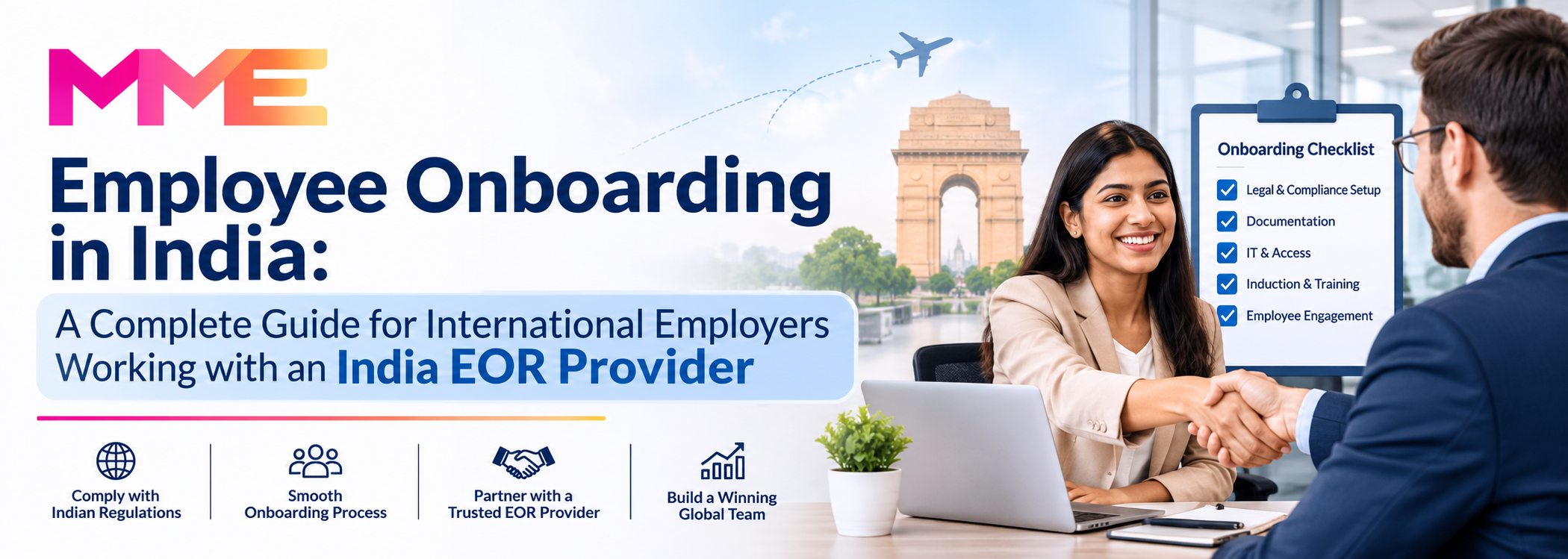
Hiring skilled professionals in India is an attractive opportunity for international businesses. From engineering and semiconductor design to automotive manufacturing, electronics and information technology, Indian professionals support the growth of organisations across global markets. However, hiring the right candidate is only the beginning. Ensuring a smooth and compliant joining experience is equally important.
For international companies without an established Indian entity, employee onboarding can involve additional challenges, including employment documentation, payroll registration, statutory requirements, employee verification and HR administration. Partnering with a reliable India EOR provider can simplify these activities by offering a structured local employment arrangement.
An Employer of Record (EOR) helps international companies employ professionals in India while managing agreed employment, payroll and HR administration responsibilities. It also helps coordinate onboarding activities so that new employees understand their employment terms, complete the necessary formalities and are prepared to begin their roles.
This guide explains how employee onboarding works in India, the documents employers should prepare, the compliance considerations to understand and how an India EOR provider can support international workforce expansion.
What Is Employee Onboarding in India?
Employee onboarding in India is the structured process of integrating a newly hired professional into an organisation. It includes employment documentation, identity and background verification where appropriate, payroll setup, statutory formalities, policy communication, workplace orientation and role-specific training.
For international employers, onboarding also requires coordination between the overseas HR team, the Indian employment partner and the employee.
A well-planned onboarding process generally covers five areas:
- Documentation: Collecting and verifying relevant employment and identity information.
- Employment formalities: Issuing appointment letters and completing employment agreements.
- Payroll registration: Setting up salary details, bank information and applicable statutory records.
- Compliance: Addressing relevant employment, tax and social security requirements.
- Employee integration: Introducing the employee to the organisation, team, responsibilities and workplace policies.
When an international business works with an India EOR provider, the provider can coordinate the employment and administrative aspects of onboarding under the agreed service arrangement.
Why Is Employee Onboarding Important for International Companies Hiring in India?
Employee onboarding creates the foundation for a professional relationship between the employer and employee. A poorly managed joining process can create confusion about salary, responsibilities, benefits, reporting structures and employment conditions.
For international companies, these challenges can become more complicated because HR teams may be unfamiliar with Indian employment practices.
1. Establishes Clear Employment Terms
Employees should understand their designation, compensation, reporting structure, working hours, leave entitlements and employment conditions before starting work.
A properly prepared employment agreement reduces misunderstandings and establishes clear expectations for both parties.
2. Supports Employment Compliance
Indian employment requirements involve documentation, wage administration, social security and applicable state-level obligations.
A structured onboarding process helps employers collect relevant information and complete the required formalities from the beginning of employment.
3. Creates a Positive Employee Experience
A new employee’s first interaction with an organisation influences their initial impression of the workplace.
Timely communication, organised documentation, a clear joining schedule and proper introductions help employees feel welcomed and prepared.
4. Improves Payroll Accuracy
Incorrect employee details, incomplete banking information or unclear compensation structures can create payroll problems.
Collecting and validating the necessary information before the payroll cut-off helps reduce avoidable errors.
5. Helps International Teams Work Efficiently
When employees work in India for an overseas organisation, they need to understand communication channels, reporting responsibilities, time-zone expectations and project workflows.
An organised onboarding programme connects the employee with the international team from the beginning.
How Does an India EOR Provider Manage Employee Onboarding?
An India EOR provider supports international employers by coordinating local employment formalities and agreed HR administration.
Under an EOR arrangement, the EOR is the formal employer for the agreed employment relationship, while the client company generally directs the employee’s daily operational work and business responsibilities.
The onboarding process usually follows these steps.
Step 1: Understand the Company’s Hiring Requirements
The first step is to understand the international company’s workforce requirements.
The EOR provider should collect information about:
- Job title and responsibilities.
- Employee work location.
- Proposed joining date.
- Salary and compensation structure.
- Employment duration and terms.
- Working hours and reporting arrangements.
- Applicable benefits.
- Remote, hybrid or office-based working arrangements.
For example, an international automotive company hiring a mechanical design engineer in Pune may have different onboarding requirements from a technology company hiring a remote software developer in Bengaluru.
Understanding these differences helps establish the correct employment documentation and onboarding plan.
Step 2: Prepare the Employment Agreement and Appointment Letter
After the candidate is selected, the employment documentation must be prepared.
The documents should clearly establish the employment relationship and explain the employee’s terms and conditions.
Important details generally include:
- Employee name and designation.
- Job responsibilities.
- Date of joining.
- Salary and compensation components.
- Working location.
- Working hours.
- Leave and holiday provisions.
- Applicable benefits.
- Confidentiality obligations.
- Intellectual property provisions.
- Notice period and termination conditions.
For employees working on international projects, confidentiality and intellectual property clauses deserve particular attention.
The employment agreement should be consistent with applicable Indian employment requirements and the actual working arrangement.
Step 3: Collect and Verify Employee Documents
Document collection is an essential part of employee onboarding in India.
The exact documents required depend on the employee’s role, employment arrangement, applicable law and payroll requirements.
Commonly requested information may include:
| Document or information | Purpose |
| PAN details | Tax and payroll-related administration, where required |
| Identity and address information | Employee identification and applicable verification |
| Bank account details | Salary disbursement |
| Educational certificates | Qualification verification, where relevant |
| Previous employment details | Experience and employment verification |
| Experience or relieving documents | Verification of previous employment, where appropriate |
| Passport details | Relevant international travel or immigration requirements |
| Photographs | Employment records or identification, where required |
| UAN or previous PF information | Applicable provident fund administration |
| Nomination and dependent details | Relevant statutory benefits and employee records |
Employers should collect only information that is necessary for a defined and lawful purpose.
Sensitive personal information should be handled through secure channels with appropriate access restrictions. Identity documents should not be collected indiscriminately simply because they appear on a generic onboarding checklist.
Step 4: Complete Background Verification
Background verification helps employers validate relevant information about a prospective employee.
Depending on the position and business requirements, verification may include:
- Educational qualification checks.
- Previous employment verification.
- Professional reference checks.
- Identity verification.
- Relevant professional certification checks.
- Role-appropriate background screening.
For specialised positions, verification can be particularly important.
For example, an electronics manufacturer recruiting a quality engineer may need to verify previous manufacturing experience and relevant technical qualifications.
International employers should define the verification scope, obtain appropriate permissions where required and ensure that the process is proportionate to the role.
Step 5: Complete Payroll and Statutory Setup
Payroll setup is one of the most important onboarding activities.
The employee’s compensation information must be entered accurately so that salary payments and applicable statutory processes can be managed correctly.
This may involve:
- Employee payroll registration.
- Salary structure configuration.
- Bank account validation.
- PAN and applicable tax information.
- Provident fund information and eligibility assessment.
- Employees’ State Insurance eligibility assessment.
- Professional tax requirements, where applicable.
- Tax withholding configuration.
- Applicable benefit and insurance enrolment.
The EOR provider should coordinate the required payroll information and statutory administration according to the employee’s eligibility and applicable legal provisions.
The company should also confirm the payroll cut-off date and first salary payment schedule with the provider.
Step 6: Introduce the Employee to the Organisation
Completing employment paperwork does not mean onboarding is finished.
Employees also need to understand the organisation, their team and their responsibilities.
A structured orientation programme should cover:
- Company introduction and business background.
- Team structure and reporting manager.
- Job responsibilities and performance expectations.
- Internal communication channels.
- Work schedules and meeting arrangements.
- Company policies.
- Leave and attendance procedures.
- Workplace conduct and security expectations.
For overseas companies, it is useful to explain the relationship between the Indian employee and the international management team.
Step 7: Provide Tools, Technology and System Access
Employees should receive the resources required to perform their jobs.
Depending on the role, these may include:
- Official email accounts.
- Laptop or workstation.
- Project management software.
- HR management systems.
- Communication platforms.
- Secure access to company applications.
- Technical documentation.
- Role-specific software and tools.
IT access should follow the company’s security policies and least-privilege principles.
For engineering and semiconductor professionals, access may also involve specialised design software, development environments and confidential project repositories.
Step 8: Conduct Role-Specific Training
Training should help employees understand the practical requirements of their positions.
For example:
- Mechanical engineers may require product design and engineering process orientation.
- Semiconductor engineers may need access to project specifications and approved design workflows.
- Manufacturing professionals may require quality systems and operational procedure training.
- Software developers may need coding standards, development tools and security training.
- Finance professionals may require accounting systems and reporting process orientation.
A role-specific training plan makes it easier for employees to become productive.
Step 9: Conduct Follow-Ups After Joining
Employee onboarding should continue beyond the first working day.
HR teams and reporting managers should schedule follow-up discussions to identify concerns and provide assistance.
A practical follow-up schedule could include:
- First day: Joining confirmation and workplace orientation.
- First week: Role clarity, system access and team integration.
- First month: Feedback on training and initial responsibilities.
- First three months: Performance discussion and onboarding review.
The timing should be adapted to the employee’s role and contractual arrangements.
Employee Onboarding Checklist for International Employers in India
International HR teams can use the following checklist to coordinate onboarding activities.
| Onboarding activity | Responsibility | Status to track |
| Confirm hiring requirements | Client company | Pending / Completed |
| Finalise compensation | Client company and EOR | Pending / Completed |
| Prepare employment documents | EOR provider | Pending / Completed |
| Collect necessary employee details | EOR and employee | Pending / Completed |
| Complete relevant verification | Assigned verification partner | Pending / Completed |
| Set up payroll records | EOR provider | Pending / Completed |
| Assess applicable statutory requirements | EOR provider and relevant advisers | Pending / Completed |
| Confirm joining date | Client company and EOR | Pending / Completed |
| Arrange equipment and system access | Client IT team | Pending / Completed |
| Conduct employee orientation | Client company | Pending / Completed |
| Schedule manager check-ins | Client company | Pending / Completed |
| Review initial onboarding experience | Client company and EOR | Pending / Completed |
The checklist should be customised according to the employee’s location, role, employment terms and applicable legal requirements.
What Documents Are Required for Employee Onboarding in India?
The documents required for onboarding depend on the nature of employment and the applicable statutory requirements.
However, most onboarding processes involve the following categories.
1. Identity and Personal Information
Employers may need relevant identity details, contact information, residential address and other information required for lawful employment administration.
2. Employment Documentation
This includes the appointment letter, employment agreement, job description, compensation details and applicable policy acknowledgements.
3. Payroll Information
Bank account details, PAN information, applicable tax declarations and salary-related information are used to establish the payroll record.
4. Statutory Information
Depending on eligibility and applicable requirements, employees may need to provide provident fund details, UAN information, ESI-related information, nomination details and other relevant records.
5. Qualification and Experience Documents
For technical and managerial positions, educational certificates, professional qualifications and previous employment information may be required.
An effective EOR onboarding process should distinguish between mandatory documents, role-specific requirements and information that is collected only when necessary.
Indian Employment Compliance: What Should International Employers Know?
Employment onboarding in India must reflect the applicable legal framework rather than relying on a generic international HR checklist.
India has central employment legislation, state-level requirements and provisions that may differ according to establishment type and employee category.
1. India’s Four Labour Codes
The Government of India brought the four Labour Codes into effect on 21 November 2025:
- Code on Wages, 2019.
- Industrial Relations Code, 2020.
- Code on Social Security, 2020.
- Occupational Safety, Health and Working Conditions Code, 2020.
These codes address wages, employment relationships, social security and workplace conditions.
The Government’s announcement also highlights the importance of formal appointment documentation and employee welfare.
International employers should ensure that their onboarding processes reflect the applicable provisions, notifications and central and state rules.
2. Provident Fund Requirements
The provident fund framework provides retirement-related social security benefits to eligible employees.
During onboarding, employers should assess applicable coverage, employee eligibility, existing UAN details and relevant contribution requirements.
The EOR provider should coordinate the necessary information and applicable administration.
3. Employees’ State Insurance
Employees’ State Insurance provides medical and other social security benefits to eligible employees covered under the applicable framework.
Employers should evaluate the relevant establishment coverage, employee eligibility and contribution requirements.
4. Professional Tax
Professional tax is a state-level requirement in states that levy it.
The applicable rules, rates, thresholds and procedures vary by location.
Companies hiring across different Indian states should ensure that payroll setup reflects the correct local requirements.
5. Income Tax and Salary Deductions
Employee payroll information must support accurate salary tax calculations and applicable tax withholding.
Employers should ensure that payroll processes reflect the current income tax provisions, employee declarations and relevant reporting requirements.
6. Employee Data Protection
Employee onboarding involves collecting personal information, including identity details, contact information, banking records and employment history.
The Digital Personal Data Protection Act, 2023 and the Digital Personal Data Protection Rules, 2025 establish India’s framework for personal data protection, with phased commencement provisions.
International employers and EOR providers should assess their respective roles in processing employee data and establish appropriate privacy notices, access controls, retention practices and security measures in line with applicable requirements.
How Does Remote Employee Onboarding Work in India?
Remote onboarding requires additional coordination because employees may not physically visit the company’s office.
An international company may recruit a software developer in Hyderabad while its HR and management teams operate from the United Kingdom or Germany.
A remote onboarding programme should include:
- Digital employment documentation and appropriate verification.
- Secure collection of required employee information.
- Payroll and statutory setup.
- Delivery of company equipment, where applicable.
- Creation of email and software accounts.
- Virtual introductions with managers and colleagues.
- Clear communication of working hours and time-zone expectations.
- Online training and access to project resources.
- Regular follow-up meetings during the initial employment period.
MME PEO & EOR India’s Remote Employee Services page also highlights remote onboarding, work companions, welcoming arrangements and communication support as relevant parts of remote workforce management.
Industry-Specific Employee Onboarding Requirements
Employee onboarding should not be identical across every industry. The employee’s responsibilities, work environment, equipment and compliance requirements influence the onboarding process.
1. Engineering and Manufacturing
Engineering and manufacturing companies may recruit professionals for design, production, maintenance, quality and industrial operations.
Their onboarding process may include:
- Technical qualification verification.
- Engineering software access.
- Product and process orientation.
- Quality management procedures.
- Workplace safety training.
- Equipment and facility access.
- Project reporting responsibilities.
For employees entering a manufacturing facility, the employer should also assess applicable establishment-specific and workplace safety requirements.
2. Semiconductor and Electronics Manufacturing
Semiconductor and electronics businesses often work with confidential product specifications, proprietary design information and specialised technical systems.
Onboarding may require:
- Verification of relevant technical qualifications.
- Access to approved design and development environments.
- Intellectual property and confidentiality documentation.
- Information security training.
- EDA software access, where applicable.
- Design documentation and workflow orientation.
- Project-specific security protocols.
A structured onboarding programme helps new engineers understand both their technical responsibilities and the organisation’s confidentiality requirements.
3. Automotive Industry
Automotive companies may recruit professionals in vehicle design, production engineering, testing, quality assurance and supply chain management.
Their onboarding programme can include product familiarisation, quality standards, safety procedures, supplier coordination and engineering process orientation.
4. Information Technology
IT companies often recruit software developers, cybersecurity specialists, data engineers and cloud professionals.
Onboarding should cover system access, coding standards, development tools, cybersecurity policies, data handling and project workflows.
5. Executive and Senior Management
Senior professionals require a different onboarding approach because their responsibilities may involve business strategy, team leadership and decision-making.
Executive onboarding should include:
- Organisational structure.
- Business objectives.
- Leadership expectations.
- Financial and operational priorities.
- Key stakeholder introductions.
- Delegated authority.
- Confidentiality and governance requirements.
For international companies appointing senior professionals in India, recruitment and EOR support can be coordinated as part of the wider hiring process.
Common Employee Onboarding Challenges Faced by International Employers
International businesses may encounter several difficulties when onboarding Indian employees without established local HR support.
Unfamiliarity with Local Employment Requirements
Overseas HR teams may not understand the documentation, payroll and statutory requirements applicable in India.
Solution: Work with an India EOR provider that understands the relevant local employment framework and clearly defines its compliance responsibilities.
Delays in Documentation
Incomplete employee information or delayed employment agreements can affect joining schedules.
Solution: Establish a pre-joining document checklist and communicate requirements to employees before their start date.
Payroll Setup Errors
Incorrect salary information, bank details or statutory data can create payroll discrepancies.
Solution: Introduce a documented payroll validation process before the monthly cut-off.
Remote Communication Gaps
Employees working remotely may struggle to understand reporting structures and organisational expectations.
Solution: Schedule virtual introductions, provide written onboarding material and assign a reporting manager or onboarding buddy.
Unclear Responsibilities Between the EOR and Client
When multiple organisations participate in onboarding, responsibilities may overlap.
Solution: Create a responsibility matrix defining who manages documentation, equipment, training, payroll inputs and employee communication.
What Are the Benefits of Working with an India EOR Provider for Employee Onboarding?
An experienced India EOR provider can help international employers coordinate local employment formalities while maintaining a consistent onboarding experience.
Key benefits include:
Simplified local employment administration: The provider coordinates agreed employment documentation, onboarding and related HR processes.
Payroll coordination: Employee compensation and relevant payroll information can be established through a structured process.
Support with applicable compliance: The EOR manages allocated statutory and employment administration responsibilities under the agreement.
Remote workforce support: International companies can coordinate onboarding for professionals working from different Indian locations.
Reduced HR administration: Overseas HR teams can spend less time managing local employment paperwork.
Better employee experience: A documented joining process helps new employees understand their employment terms, benefits and responsibilities.
Support for industry-specific hiring: Recruitment support can be combined with employment administration when businesses need specialised Indian professionals.
The actual benefits depend on the provider’s service scope, the employment arrangement and the responsibilities agreed between the parties.
How to Choose the Right India EOR Provider for Employee Onboarding
Selecting an EOR partner is an important business decision. The provider should offer more than employment documentation and salary processing.
International companies should evaluate the following factors.
1. Understanding of Indian Employment Regulations
Check whether the provider understands the applicable Labour Codes, statutory requirements, state-level provisions and payroll processes.
2. Structured Onboarding Process
Ask whether the provider follows a documented onboarding workflow with clear responsibilities, timelines and communication procedures.
3. Payroll and HR Capabilities
Evaluate its ability to coordinate salary processing, employee records, applicable statutory administration and payroll reporting.
4. Remote Onboarding Support
For distributed teams, confirm whether the provider supports digital documentation, remote employee coordination and joining formalities.
5. Industry Recruitment Knowledge
If you are hiring specialised professionals, assess whether the provider understands engineering, semiconductor, automotive, electronics or manufacturing roles.
6. Data Protection and Information Security
Ask how employee information is collected, stored, accessed and protected. Review confidentiality terms, data processing arrangements and incident response procedures.
7. Transparent Pricing and Service Agreements
Understand the management fee, employee-related costs, statutory contributions, additional charges and exit-related expenses.
The service agreement should clearly define employment responsibilities, funding arrangements, payroll approvals, employee support and termination procedures.
Practical Example: Onboarding an Indian Engineering Team Through an EOR
Consider a hypothetical European engineering company planning to hire four professionals in India:
- Two mechanical design engineers.
- One electrical engineer.
- One quality assurance specialist.
The company has identified suitable candidates but does not yet have its own Indian subsidiary.
It decides to explore an EOR arrangement.
The onboarding process could involve the following:
Before joining: The company confirms job responsibilities, compensation and joining dates with the EOR provider.
Employment documentation: The EOR prepares the relevant employment agreements and collects the necessary employee information.
Verification: Relevant qualifications and employment details are verified according to the agreed screening requirements.
Payroll setup: Employee salary information and applicable statutory details are configured.
First working day: The client introduces employees to the international engineering team and provides access to project systems.
First month: Managers review training progress, work allocation and employee feedback.
This example illustrates how an EOR arrangement can coordinate the local employment aspects of onboarding while the client company focuses on technical training and project delivery.
How MME PEO & EOR India Supports Employee Onboarding
MME PEO & EOR India, a division of MM Enterprises, provides global payroll, PEO, EOR, remote employee and recruitment support services.
Its service portfolio is relevant to international companies looking to hire professionals in India and coordinate employment administration.
MME’s EOR offering supports businesses that need assistance with local employment arrangements and HR administration.
Its Remote Employee Services also address important aspects of remote workforce management, including:
- Remote employee onboarding.
- Recruitment and hiring support.
- Payroll and benefits coordination.
- Performance management.
- Communication and collaboration support.
- Remote workforce administration.
For businesses with specialised recruitment requirements, MME also provides recruitment support across areas including IT, engineering, manufacturing and healthcare.
This can be useful when an international organisation needs both talent acquisition assistance and a structured employment arrangement for its Indian workforce.
By coordinating recruitment, EOR and payroll requirements, businesses can establish a more organised approach to building teams in India.
Frequently Asked Questions About Employee Onboarding in India
1. What is the employee onboarding process in India?
Employee onboarding in India involves preparing employment agreements, collecting necessary employee information, completing relevant verification, setting up payroll, addressing applicable statutory formalities and introducing employees to their roles. International companies should also provide workplace orientation, system access and role-specific training to ensure a smooth joining experience.
2. How can an India EOR provider help with employee onboarding?
An India EOR provider coordinates agreed local employment activities, including employment documentation, employee information collection, payroll setup and applicable statutory administration. It also helps international employers organise the joining process without requiring them to manage every local employment formality independently.
3. What documents are required for employee onboarding in India?
Common onboarding documents may include PAN details, bank information, identity and address details, educational certificates, previous employment records and relevant statutory information. The exact requirements depend on the role, employment arrangement and applicable laws. Employers should collect only information necessary for legitimate employment purposes.
4. Can international companies onboard remote employees in India?
Yes. International companies can onboard remote employees in India through an appropriate local employment arrangement, including EOR services where suitable. The process may include digital employment documentation, payroll setup, secure system access, virtual orientation and regular communication with the overseas reporting manager.
5. How long does employee onboarding take in India?
The onboarding timeline depends on document availability, verification requirements, employment agreement approvals, payroll readiness and the employee’s joining arrangements. Straightforward onboarding may be completed relatively quickly, while specialised verification or complex employment requirements can take longer. Employers should agree on a realistic timeline with their EOR provider.
6. Is background verification mandatory for every employee in India?
Background verification requirements depend on applicable laws, the employer’s policies, the employee’s position and the nature of the business. Employers may verify qualifications, employment history and references where appropriate. Screening should be proportionate, transparent and conducted with relevant permissions and privacy safeguards.
7. What are the major compliance considerations during employee onboarding in India?
Important considerations include employment documentation, applicable wage provisions, provident fund and ESI eligibility, professional tax where applicable, salary tax withholding, employee benefits and personal data protection. Requirements can differ according to location, establishment and employee category, so employers should obtain appropriate local guidance.
8. Why should international employers choose an EOR provider in India?
An EOR provider can help international employers coordinate local employment, payroll and HR administration without immediately establishing their own Indian employment entity, where the arrangement is legally appropriate. It can also support remote hiring, employee documentation and ongoing employment administration through an agreed service structure.
Conclusion: Build a Better Employee Onboarding Experience with the Right India EOR Provider
Successful international hiring does not end when a candidate accepts an offer. Employees need clear employment documentation, accurate payroll setup, relevant compliance formalities, proper orientation and ongoing support to become effective members of an organisation.
For international companies hiring in India, these responsibilities can be challenging without local HR expertise.
Working with a reliable India EOR provider can help simplify employment administration, coordinate onboarding activities and support a more organised employee experience.
Whether your business is hiring engineering professionals, semiconductor specialists, automotive experts, manufacturing employees or remote technology teams, a structured onboarding process is essential for building a productive workforce.
MME PEO & EOR India, a division of MM Enterprises, supports international businesses through EOR, PEO, payroll outsourcing, remote employee and recruitment support services.
Planning to hire and onboard employees in India?
Connect with MME PEO & EOR India to discuss your workforce requirements. Whether you need support with employee onboarding, local employment arrangements, payroll administration or specialised recruitment, MME can help you explore an appropriate HR support solution for your Indian operations.
Explore Employer of Record Services in India or request a customised EOR quotat