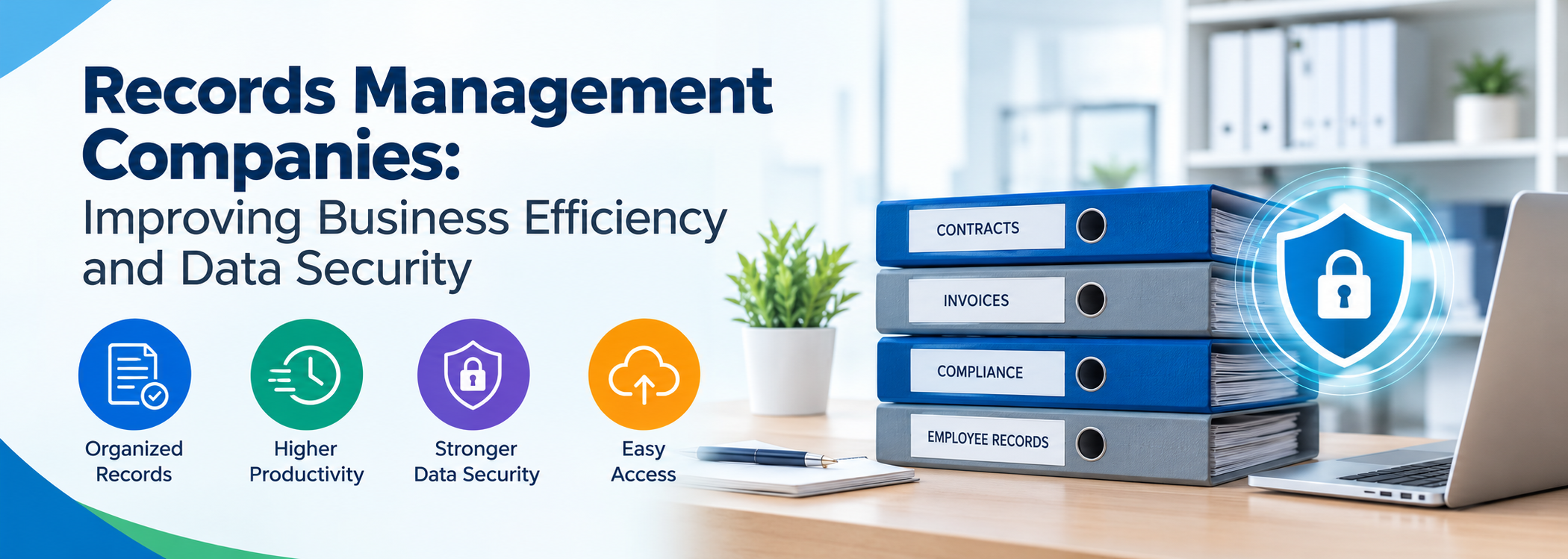
Businesses generate large volumes of records every day, from employee files and payroll documents to contracts, invoices, compliance records, and customer information. When these records are stored across multiple folders, offices, and digital systems, finding important information becomes difficult. Poor recordkeeping can also increase administrative costs, create security risks, and complicate compliance.
Records management companies help businesses organise, store, protect, retrieve, and retain records throughout their lifecycle. By using structured records management services, secure document storage, and digital archiving processes, organisations can improve operational efficiency, maintain better control over business information, and support their recordkeeping obligations.
For companies managing employee documentation, payroll information, and sensitive business records, choosing an appropriate records management approach is an important part of building reliable business operations. MME Payroll India, a division of M M Enterprises, supports businesses with payroll, PEO, and Employer of Record (EOR) services in India, where accurate employee documentation and organised HR processes are important.
What Do Records Management Companies Do?
Records management companies help organisations manage business information from the time a record is created or received until it is securely archived or disposed of according to an approved retention policy.
Their services may cover physical documents, electronic files, employee records, financial paperwork, contracts, and other business information.
Depending on the provider, records management services can include:
- Physical document collection, indexing, and storage.
- Digital scanning and document classification.
- Secure document storage services.
- Digital records management systems.
- Document retrieval and access management.
- Document archiving services.
- Retention scheduling and authorised disposal.
- Support for recordkeeping procedures and audits.
The goal is not simply to store documents. It is to make business information easier to locate, protect, maintain, and manage throughout its useful life.
For example, an HR team may need to retrieve an employment contract, verify an employee’s joining date, or access payroll-related documentation. A structured records management system helps authorised staff locate the correct information without searching through multiple folders or requesting copies from different departments.
Why Records Management Companies Matter for Growing Businesses
As a business expands, the volume and complexity of its records usually increase. New employees create additional HR documentation, additional locations generate more operational records, and new business relationships introduce contracts and supporting paperwork.
Without a clear system, records can become fragmented and difficult to manage.
Working with an appropriate records management provider or implementing an internal records management system can help businesses address several challenges.
1. Improved Operational Efficiency
Employees often spend valuable time searching for documents, checking versions, and requesting missing information. These tasks can delay approvals and interrupt normal business activities.
A well-organised records management process uses consistent naming conventions, indexing, classification, and access procedures to make information easier to retrieve.
For example, a finance team processing invoices can locate supporting documents more efficiently when records are organised by supplier, date, and transaction reference.
2. Better Data Security
Business records may contain confidential employee information, financial details, customer data, and commercially sensitive agreements. Uncontrolled access can expose this information to accidental disclosure or misuse.
Records management companies may offer secure storage facilities, controlled access, document tracking, and digital security features, depending on the service.
Businesses should assess these safeguards before selecting a provider and ensure that access is limited to authorised personnel.
3. More Consistent Recordkeeping
Different departments may store information in different formats or maintain separate copies of the same document. This can create confusion about which version is accurate.
A standardised system helps establish consistent procedures for creating, naming, updating, storing, and retrieving records.
Clear responsibilities also help employees understand where records belong and who can access them.
4. Support for Audits and Compliance
Organised records can help businesses respond to audits, internal reviews, employee queries, and regulatory requests.
For example, an HR department may need to locate employment agreements or payroll records for a particular period. A consistent filing and retention process can make this task easier.
However, using a records management company does not automatically ensure compliance. Businesses must still identify the legal requirements that apply to their records and maintain appropriate policies, controls, and oversight.
Types of Records Management Services Businesses Can Consider
Different organisations have different storage, security, and retrieval requirements. Understanding the available options helps businesses choose a solution that fits their operations.
Physical Document Storage Services
Physical records remain important for organisations that maintain signed contracts, original certificates, historical files, or documents that must be retained in paper form.
Document storage services may include secure facilities, organised boxes or files, indexing, retrieval requests, and controlled access.
When comparing providers, businesses should ask about facility security, environmental protection, document tracking, retrieval timelines, and procedures for handling damaged or missing records.
Digital Records Management
Digital records management uses electronic systems to organise, search, access, and maintain digital information.
Depending on the platform, features may include:
- Searchable document libraries.
- User permissions and access controls.
- Version history and activity logs.
- Document categorisation and metadata.
- Backup and recovery capabilities.
- Retention and disposal workflows.
These features can help reduce dependence on scattered email attachments, local computer folders, and duplicate files.
Businesses should also evaluate system integration, data export options, backup arrangements, and security controls before adopting a digital platform.
Document Scanning and Digitisation
Digitisation converts paper documents into electronic files that can be searched, stored, and shared according to the organisation’s access policies.
A typical process includes document preparation, scanning, quality checks, indexing, and secure digital storage.
For example, an HR department with years of paper employee files may digitise selected records to improve retrieval. The business should first determine whether originals must be retained and whether the digitised copies meet the requirements applicable to those documents.
Document Archiving Services
Document archiving services help businesses retain records that are no longer needed for daily activities but must remain available for a defined period.
Examples include historical contracts, completed project files, closed employee records, and older financial documentation.
Effective archiving requires more than moving files into a separate folder. Records should have clear retention periods, ownership, access permissions, and authorised disposal dates.
How Document Management Companies in India Help Businesses Scale
Businesses operating in India may manage records across multiple offices, departments, and service providers. International companies may also need to coordinate documentation between Indian operations and overseas headquarters.
Document management companies in India may provide services that help organisations standardise how information is stored, retrieved, and maintained.
Centralised Access to Business Information
A structured repository can help authorised teams access the documents they need without repeatedly contacting other departments.
This can be useful for companies managing multiple locations or distributed teams, provided the system has appropriate access controls and clear ownership.
Reduced Administrative Work
Consistent classification and retrieval procedures can reduce repetitive filing, document searches, and manual tracking.
This allows HR, finance, and administrative teams to spend more time on core responsibilities rather than locating paperwork.
Support for Business Continuity
Businesses should plan for incidents such as equipment failure, accidental deletion, office disruption, and cyberattacks.
Suitable digital systems may provide backups, recovery options, and controlled access from alternative locations. Physical records providers may also offer secure off-site storage.
These measures can support business continuity, but they should form part of a broader recovery and security plan rather than being treated as a complete guarantee against data loss.
Records Management for HR, Payroll, and Employee Documentation
HR and payroll teams handle some of an organisation’s most sensitive records. These may include employment contracts, onboarding documents, salary information, attendance records, statutory documentation, and employee correspondence.
Poorly organised records can delay payroll queries, complicate employee onboarding, and make it harder to retrieve information when required.
A structured HR records management process should address the following areas:
- Employee file organisation: Maintain consistent records for each employee.
- Access restrictions: Limit sensitive information to authorised HR, payroll, and management personnel.
- Record accuracy: Establish processes for correcting outdated or incomplete information.
- Retention policies: Define how long each category of record must be retained.
- Secure disposal: Ensure records are destroyed or deleted only when authorised and permitted.
- Audit readiness: Keep appropriate documentation and records of relevant actions.
For example, when a company hires employees across several Indian locations, consistent employee documentation procedures can help HR teams maintain more reliable records and retrieve information when needed.
MME Payroll India provides payroll, PEO, and EOR services in India. These services address employment administration and payroll-related requirements rather than general-purpose document storage. Businesses using these services should still establish clear responsibilities for record creation, access, retention, and secure handling.
Learn more about MME Payroll India’s EOR services to understand how employment administration support may fit into your wider HR processes.
Common Records Management Challenges and Practical Solutions
Even businesses that recognise the importance of good recordkeeping can struggle to maintain consistent procedures.
| Common challenge | Practical solution |
| Documents are scattered across departments | Establish a central index or approved document repository. |
| Employees cannot find the latest version | Use version control and clear naming conventions. |
| Sensitive records are accessible to too many people | Apply role-based access permissions and review them regularly. |
| Paper records take up excessive space | Assess digitisation and secure off-site storage options. |
| Retention periods are unclear | Create a records retention schedule based on applicable requirements. |
| Old records accumulate indefinitely | Introduce authorised review and disposal procedures. |
| Digital files may be lost or corrupted | Implement suitable backups, recovery testing, and access monitoring. |
The most effective approach combines appropriate technology, clear policies, trained employees, and regular reviews.
How to Choose the Right Records Management Company
Selecting a provider requires more than comparing storage prices. Businesses should understand what is included in the service and how their information will be protected throughout the relationship.
Use this checklist when evaluating records management companies:
- Identify your requirements. Determine the types of records, expected volumes, retrieval frequency, and storage duration.
- Review security measures. Ask about facility access, digital permissions, encryption where applicable, incident handling, and security monitoring.
- Understand retrieval processes. Confirm how records are requested, delivered, tracked, and returned.
- Check retention and disposal procedures. Ensure the provider can support your approved retention policies and authorised destruction requirements.
- Assess technology and integration. Consider search functionality, document indexing, backups, reporting, and compatibility with existing systems.
- Review confidentiality and contracts. Clarify responsibilities, data handling, subcontracting, breach notification, and service termination arrangements.
- Compare total costs. Consider collection, scanning, storage, retrieval, access, and disposal fees rather than only the initial price.
Businesses should also assess whether they need an external provider, an internal digital records system, or a combination of both.
Frequently Asked Questions About Records Management Companies
1. What do records management companies do?
Records management companies help businesses organise, store, retrieve, protect, archive, and dispose of records according to agreed procedures and applicable retention requirements.
2. What are records management services?
Records management services may include physical document storage, scanning, indexing, digital records management, document retrieval, archiving, and authorised disposal.
3. What is the difference between document management and records management?
Document management focuses on creating, organising, editing, sharing, and tracking documents. Records management focuses on maintaining reliable records throughout their lifecycle, including retention, access control, compliance, and disposal.
4. Are document storage services suitable for small businesses?
Yes. Small businesses can use document storage services when they have limited office space, require secure off-site storage, or need a more organised way to retrieve historical paperwork. The appropriate service depends on document volume and access requirements.
5. What is digital records management?
Digital records management uses electronic systems and defined procedures to classify, store, retrieve, protect, retain, and dispose of digital records.
6. How do businesses choose document management companies in India?
Businesses should compare security controls, storage arrangements, retrieval processes, technology, retention support, service agreements, and total costs. The provider should understand the organisation’s specific recordkeeping requirements.
7. How long should businesses retain records?
Retention periods depend on the record type, applicable laws, contractual obligations, and business requirements. Organisations should maintain a documented retention schedule and obtain appropriate professional advice when requirements are unclear.
Conclusion: Choose the Right Records Management Companies for Better Business Control
As businesses grow, managing records becomes an increasingly important part of operational efficiency, data security, and reliable decision-making. Disorganised files, unclear retention policies, and uncontrolled access can create unnecessary work and expose organisations to avoidable risks.
The right records management companies can help businesses establish more organised processes for document storage, retrieval, digital records management, and long-term archiving. By combining appropriate systems with clear policies and access controls, organisations can improve information management while supporting their wider operational needs.
For businesses managing employee documentation and payroll-related information in India, MME Payroll India provides payroll, PEO, and EOR services that can support employment administration.
Looking to improve your HR and payroll administration in India?
Contact MME Payroll India to discuss your employment administration requirements and explore suitable support for your business. Build more organised HR processes that support efficiency, reliable documentation, and business growth.